16 vs 17 vs 18 Inch Wheels for a Tacoma
Short answer
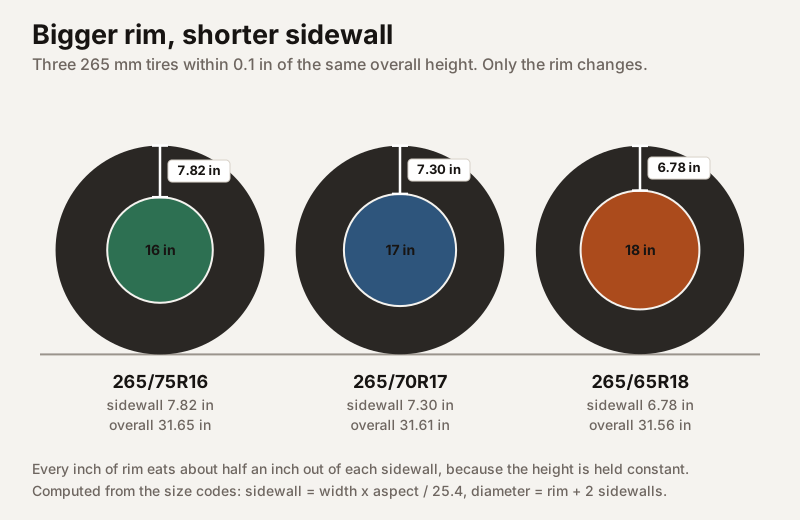
For a Tacoma, all three share the bolt pattern, so the choice is about sidewall. At a matched ~32-inch diameter you get about 7.8 inches of sidewall on a 16, 7.3 on a 17, and 6.8 on an 18. 16s air down best but tire selection is shrinking; 17x8.5 is the off-road sweet spot; 18s favor street ride and looks.
Does wheel diameter actually change what tire I can run?
Not in the way most people expect. Overall tire diameter is set by the rim plus twice the sidewall, so a 16, a 17, and an 18 can all carry a tire that stands the same height off the ground - you just trade rim for rubber. Grow the wheel one inch and, to keep the same overall diameter, the sidewall has to shrink by about half an inch. Every 3rd- and 4th-gen Tacoma also shares the same 6x139.7 bolt pattern, so wheel diameter is a sidewall-and-fitment decision, not a bolt-pattern one.
Here is the trade in one line, using three tires that all stand right around 31.6 inches tall: a 265/75R16 gives about 7.8 inches of sidewall, a 265/70R17 about 7.3 inches, and a 265/65R18 about 6.8 inches. Same stance, same rolling diameter, same speedometer - but the 16 has a full inch more cushion between the road and the rim than the 18.
Sidewall is the whole story
More sidewall means more flex to soak up impacts, more rubber to protect the rim on rocks and curbs, and a deeper air-down window on the trail. Less sidewall means sharper steering, a firmer ride, and more room for big brakes and flashy wheels. That single trade-off drives almost everything below.
16 vs 17 vs 18: how do they compare on a Tacoma?
The table below assumes you keep overall diameter roughly constant (a tire in the low-32-inch range) and just change the rim it wraps. Sidewall figures are for the representative tire listed; air-down and ride notes are general and vary with tire construction, load range, and pressure.
| Wheel diameter | Sidewall & air-down | Tire selection | Ride & street feel | Best use |
|---|---|---|---|---|
| 16 in (16x7 / 16x8) | Most sidewall (~7.8 in on a 265/75R16); airs down lowest for the biggest contact patch and best pinch-flat protection | Shrinking - new A/T and M/T designs increasingly skip 16 in, but strong options remain (BFG KO2/KO3, Falken Wildpeak A/T4W) | Softest, most compliant ride; slightly vaguer on-center steering and more sidewall roll in hard corners | Dedicated trail and overland rigs, frequent airing down, budget builds |
| 17 in (17x8.5) | Balanced (~7.3 in on a 265/70R17); plenty of sidewall to air down while keeping steering crisp | Widest and deepest catalog - nearly every A/T and M/T is offered in 17 in truck sizes | Best all-around compromise: controlled but still absorbs impacts well | The off-road sweet spot; daily-driven trucks that also see dirt |
| 18 in (18x8) | Least sidewall (~6.8 in on a 265/65R18); shallow air-down window and higher risk of pinch flats and bent rims on rocks | Great for highway and street A/T sizes; thinner selection in aggressive 33-inch-plus off-road tires | Firmest and most responsive; sharpest steering but harshest over potholes and sharp edges | Street, towing, and looks; occasional light trails |
Match diameter, then compare
To compare fairly, pick the overall tire height you want first (say a 32 or a 33), then see it built on each rim. A tire-size-to-inches tool converts any 16, 17, or 18 size to real diameter, width, and sidewall so you can line them up before you shop.
Which wheel size did my Tacoma come with?
Knowing your factory size tells you your baseline and whether stepping down (minus-sizing) is even on the table. In broad strokes, Toyota put the smallest wheels on the most off-road-focused 3rd-gen trims and moved almost everything to 17s and 18s on the 4th gen.
| Trim (generation) | Stock wheel | Example stock tire |
|---|---|---|
| 3rd gen SR / SR5 (2016-2023) | 16 in | 245/75R16 |
| 3rd gen TRD Off-Road (2016-2023) | 16 in | 265/70R16 |
| 3rd gen TRD Pro (2017-2023) | 16 in | 265/70R16 |
| 3rd gen TRD Sport (2016-2023) | 17 in | 265/65R17 |
| 3rd gen Limited (2016-2023) | 18 in | 265/60R18 |
| 4th gen SR5 (2024+) | 17 in | 245/70R17 |
| 4th gen TRD Off-Road (2024+) | 17 in | 265/70R17 |
| 4th gen TRD Sport / Limited (2024+) | 18 in | 265/65R18 |
| 4th gen TRD Pro / Trailhunter (2024+) | 18 in | 265/70R18 (~33 in) |
The pattern is telling: the 3rd-gen TRD Off-Road and TRD Pro - the trims built to leave pavement - shipped on 16-inch wheels for exactly the sidewall reasons above. The 4th gen shifted its off-road trims to 17s, which keep most of that sidewall advantage while clearing the larger brakes and modern electronics.
Why is 17x8.5 the off-road sweet spot?
A 17-inch wheel splits the difference and, for most Tacoma owners, wins on the two things that matter most off pavement: tire choice and sidewall. Nearly every serious all-terrain and mud-terrain is made in 17-inch truck sizes, so you are never hunting for stock in the size and brand you want. And at a given overall diameter, a 17 still leaves plenty of sidewall to air down for traction without giving up crisp on-road steering.
- Tire selection: the deepest catalog of A/T and M/T tires, including the popular 265/70R17 (~31.6 in) and the true-33 285/70R17 (~32.7 in).
- Sidewall to air down: enough flex to wrap the tire around rocks and boost the contact patch, without the vague steering of a very tall sidewall.
- Width matters too: a 17x8.5 (versus a narrow 17x7) supports a wider 285-class tire properly and gives a squarer, more stable footprint aired down.
- Rim protection: more rubber below the barrel than an 18, so trail rocks and curbs hit sidewall instead of aluminum.
That said, the 16-inch wheel is not obsolete - it simply pushes the same trade further. A 16 gives even more sidewall (a 285/75R16 runs about 8.4 inches of it) and the deepest air-down window, which is why hardcore rock and overland builds still favor them. The catch is selection: as trucks have moved to 17s, tire makers increasingly skip 16-inch molds when they launch a new design, so your options are narrower and skew toward long-running classics.
A 16 may not clear every brake
Smaller wheels sit closer to the brake caliper. Some higher trims and later trucks use larger front brakes that a 16-inch (and occasionally a narrow 17-inch) wheel will not clear. Before buying, confirm the wheel is rated to fit your Tacoma's brake package, or test-fit one.
Should I minus-size my 18-inch wheels down to 17s?
Minus-sizing means dropping to a smaller-diameter wheel while keeping (or growing) overall tire height - for example, swapping factory 18s for aftermarket 17x8.5s and running a taller-sidewall 265/70R17 or 285/70R17. It is one of the most common first moves for a 4th-gen owner who bought a street-leaning trim but wants to wheel it. The upsides line up with everything above.
- More sidewall for the same stance - better impact absorption, better air-down, and real rim protection on rocks and curbs.
- A wider, cheaper, more capable tire catalog than most 18-inch off-road sizes.
- Often lighter aftermarket 17s than heavy factory 18s, trimming unsprung and rotational weight.
- You can usually hold overall diameter close to stock, so your speedometer and gearing barely change.
The costs are real but manageable. You are buying a second set of wheels, and the new 17s must clear your Tacoma's front brakes - verify the wheel's brake-clearance rating for your trim before you order. Any new wheel set also needs TPMS sensors and a relearn so the truck reads pressures correctly. Ride gets a touch softer and steering slightly less darty, which most owners consider a feature, not a bug.
Mind offset when you switch wheels
A new wheel is a chance to change offset and width, which affects rub and stance as much as diameter does. A wider or lower-offset 17 pushes the tire outward and can turn a clean fit into a trimming job. Model your target wheel with an offset calculator and confirm against owner photos on your generation before buying.
So which wheel size should you pick?
- Choose 16-inch if off-road performance is the priority, you air down often, and you are happy with the (shrinking) selection of proven A/T and M/T tires - confirm brake clearance first.
- Choose 17-inch (ideally 17x8.5) if you want the best all-around balance: the widest tire selection, ample sidewall to air down, and a ride that still behaves on the highway. This is the default recommendation for most Tacoma builds.
- Choose 18-inch if the truck lives mostly on pavement, you tow or want a tighter, sportier feel, and you prioritize modern wheel styling over deep off-road ability.
- If you have factory 18s and want to wheel the truck, minus-sizing to 17s is usually the smartest single upgrade - just budget for a wheel set, TPMS, and a brake-clearance check.
Confirm before you buy
Decide your overall diameter first, then build it on each rim with a tire-size-to-inches and plus-size calculator to see the sidewall and speedometer effect. Check brake clearance and offset for your exact trim, and verify the setup against real owner photos on your generation before committing.
Frequently asked questions
No. Overall tire diameter is the rim plus twice the sidewall, so a 16, 17, and 18 can all carry a tire that stands the same height - a 33 comes in all three. A bigger wheel just replaces sidewall with rim. What limits tire size on a Tacoma is the fender and suspension clearance, not the wheel diameter.
For a dedicated off-road build, yes. A 16 gives the most sidewall for airing down and the best rim protection on rocks - which is why 3rd-gen TRD Off-Road and TRD Pro trucks shipped on 16s. The catch is tire selection: as the market moves to 17s, fewer new tires are molded in 16-inch sizes, so you lean on long-running classics.
Usually yes, and it is a popular upgrade. The main requirement is that the 17-inch wheel clears your front brake calipers, which is trim-specific, so check the wheel's brake-clearance rating first. You will also need TPMS sensors and a relearn. The payoff is more sidewall, better air-down, and a wider, cheaper off-road tire catalog.
Generally the 16, then the 17, then the 18. More sidewall flexes to absorb bumps, so at a matched tire diameter a 16-inch setup rides softest and an 18-inch rides firmest and most responsive. Tire construction and pressure matter too - a stiff load-range-E tire on a 16 can still ride harder than a softer tire on an 18.
They handicap it rather than ruin it. The short sidewall limits how far you can safely air down, offers less cushion over rocks, and puts the rim closer to trail damage. For pavement, towing, and light trails an 18 is fine; for frequent rock and overland use, most owners prefer the extra sidewall of a 17 or 16.
Only if the overall tire diameter changes. If you swap 18s for 17s but keep the same rolling height, the speedometer and odometer read the same. If minus-sizing lets you fit a taller tire, the speedometer reads low by that percentage - run both diameters through a speedometer-correction calculator to see the exact effect.
Keep going
Sources
Compare your exact sizes
Run any size in this guide through the Tacoma tire calculator to see diameter, width, speedometer error, effective gearing, and highway RPM before you buy.