33 vs 35 Inch Tires on a Tacoma
Short answer
On a Tacoma, 33s (285/70R17, about 32.7 in) are a mild, near bolt-on step - a small level and light trimming get you there. True 35s (315/70R17, about 34.4 in and marketed as a 35) are a full build: a 4-6 in lift, a regear to 4.88 or 5.29, crash-plate or cab-mount trimming, and heavier braking and CV loads. For most trucks, 33s are the smarter stopping point.
What is the real difference between 33s and 35s on a Tacoma?
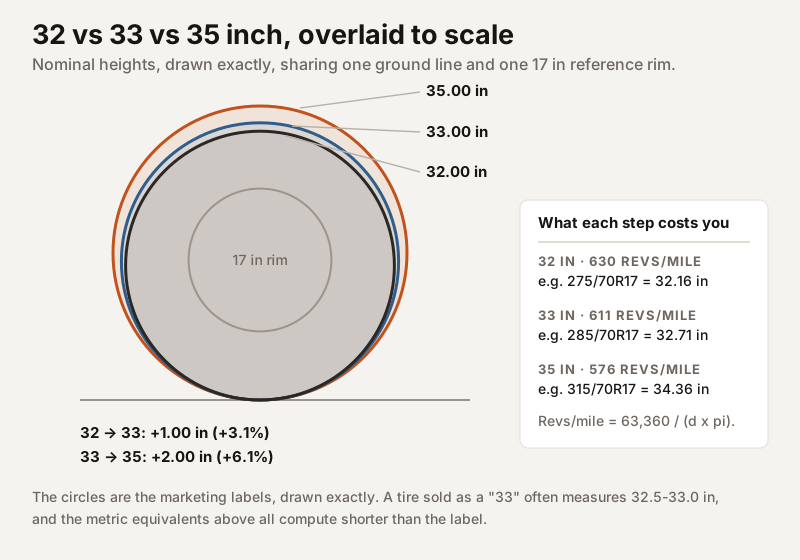
On 17-inch wheels the common true 33 is a 285/70R17 (about 32.7 in tall) and the common true 35 is a 315/70R17, which most brands market as a 35x12.50R17 even though it measures about 34.4 in. So the jump from a 33 to a 35 is only about 1.7 inches of diameter - but that inch and change lands almost entirely at the top and outside of the tire, which is exactly where a midsize truck runs out of room. It is also where weight, gearing, and clearance demands climb fast.
| Spec | 33 (285/70R17) | 35 (315/70R17) | Difference |
|---|---|---|---|
| Overall diameter | ~32.7 in | ~34.4 in | +1.7 in taller |
| Section width | ~11.2 in (285 mm) | ~12.4 in (315 mm) | +1.2 in wider |
| Marketed size | 33 in | 35 in | one size class up |
| Revs per mile | ~617 | ~587 | ~30 fewer (about 5%) |
| Typical LT all-terrain weight | ~50-58 lb | ~62-70 lb | +8-18 lb per tire |
| Axle/diff clearance vs the 33 | baseline | ~0.85 in more | roughly 1 in more ground clearance |
One inch of clearance, a lot of build
Because ground clearance only rises by about half the diameter change, going from 33s to 35s buys you only ~0.85 in under the axle - while roughly doubling the fabrication, lift, and drivetrain work. That trade is the whole reason so many Tacomas stop at 33s.
What does it actually take to fit 35s versus 33s?
This is where the two sizes stop being comparable. A 33 is a tire upgrade; a 35 is a suspension-and-drivetrain project. The table below is the general picture on stock-style wheels - your exact result depends on wheel offset, tire brand, alignment, and how hard you turn while loaded, so always confirm at full lock and full compression.
| Requirement | 33 (285/70R17) | 35 (315/70R17) |
|---|---|---|
| Lift, 3rd gen (2016-2023) | None to a ~1.5-2 in level | 4-6 in of usable lift (coilover plus rear) |
| Lift, 4th gen (2024+) | Near bolt-on to a mild level | ~2.5-3+ in lift; more forgiving than 3rd gen |
| Regear (from stock) | Optional; 4.56 mild or 4.88 if you want stock feel | Strongly recommended; 4.88 or 5.29 |
| Trimming, 3rd gen | Mud flaps, fender liner, often a cab-mount chop | Cab-mount chop (welded), fender and pinch-weld work, sometimes body-mount trim |
| Trimming, 4th gen | Minor liner or bumper-tab work | Reversible crash-plate removal plus liner and bumper trim |
| Wheel offset | Stock positive offset is fine | Often a lower offset or spacer to clear coilovers and UCAs |
3rd-gen 35s mean cutting metal
On a 3rd-gen Tacoma, clearing true 35s almost always requires a cab-mount chop (CMC) - cutting and welding a factory structural mount. It is effective but irreversible and best left to a shop. The 4th gen is friendlier: its crash plate removal to clear 35s is reversible, and it does not need a CMC in most builds.
Do you have to regear for 33s or 35s?
A taller tire acts like numerically lower (taller) gearing - the engine turns fewer times per mile, so it works harder off the line and downshifts more on grades. A 3rd-gen V6 leaves the factory around a 3.909 axle (4.30 on the manual); the 4th-gen 8-speed runs a 3.583 but hides more of the loss with its wider ratio spread. The bigger the tire, the more a regear helps.
- 33s (285/70R17): a regear is optional. Many owners run 33s on stock gears and just accept slightly softer response; 4.56 is a mild fix and 4.88 restores near-stock feel on a 3rd gen.
- 35s (315/70R17): a regear is strongly recommended. 4.88 is the common street-and-trail choice; 5.29 is popular for heavier, loaded, or overland trucks that spend time in low range.
- Regear both axles. On a full-time or part-time 4WD truck you must regear the front and rear together so the ratios match - doing only one is not an option.
- Budget for the whole job rather than one axle: two gear sets, new bearings and seals, and the precision setup labour on both ends. It is the largest single line in a 35-inch build, and the labour is the bigger half of it.
Run the numbers before you commit
Plug your stock tire diameter, target diameter, and axle ratio into a gear ratio calculator to see the effective ratio change and the gear that restores it. That takes the guesswork out of the 4.56-versus-4.88-versus-5.29 debate for your specific truck and driving style.
How do 35s affect weight, braking, and CV angles?
The costs of a 35 are not just the tire and the lift - they show up every time you accelerate, stop, and turn. A 315/70R17 is commonly 12-18 lb heavier per corner than a 285/70R17, and that extra mass is both unsprung and rotating, which is the worst kind for a chassis to carry.
- Braking: the stock brakes now have to stop more rotating mass on a taller lever arm. Expect longer stopping distances and faster pad and rotor wear, especially loaded or towing.
- Acceleration and MPG: heavier, taller tires blunt throttle response and usually cost fuel economy - a regear recovers the feel but not all of the mileage.
- CV and driveline angles: the tall lift that a 35 needs steepens the front CV-axle angles on the Tacoma's independent front suspension, adding boot and joint wear; aftermarket upper control arms and diff drops help but do not eliminate it.
- Steering and bearings: a wider, heavier tire adds load to tie rods, ball joints, and wheel bearings, and a lower offset to clear it multiplies that load through a longer scrub radius.
None of this makes 35s a bad choice for a dedicated off-road build - it just means a 35 is a system decision. If you fit 35s without addressing gearing, brakes, and front geometry, the truck will feel slower and wear parts faster, and the extra ~0.85 in of clearance will not feel worth it.
When are 33s the smarter stopping point?
For a truck that daily drives, commutes, and does moderate to serious trails, 33s hit a sweet spot the 35 struggles to justify. You get a genuine off-road tire and stance, keep most of the factory drivability, and avoid the expensive part of the build - the 4-6 in lift, the welded cab-mount chop, and the mandatory regear.
- You want a bolt-on or near-bolt-on result without cutting structural mounts (especially on a 3rd gen).
- You would rather spend your budget on tires, armor, and recovery gear than on a lift and a regear.
- You care about keeping brakes, CV angles, and fuel economy close to stock.
- You do not need the last inch of clearance - 33s already clear most trail obstacles a midsize truck should attempt.
Choose 35s when the build is genuinely about capability - big obstacles, deep articulation, larger diameter for airing down - and you are prepared to lift, regear, trim, and maintain steeper front angles. On a 4th gen the 35 is meaningfully easier than on a 3rd gen, but it is still a full build, not a tire swap.
Which should you pick?
- Pick 33s (285/70R17) if you want an off-road tire on a daily-driven truck, minimal or no lift, no regear, and no welded metalwork - the best value for the vast majority of Tacomas.
- Pick 35s (315/70R17) if you are building a dedicated trail or overland rig and are ready for a 4-6 in lift, a 4.88 or 5.29 regear, crash-plate or cab-mount trimming, and heavier braking and CV loads.
- On a 4th gen, 35s are easier - a ~2.5-3 in lift, reversible crash-plate removal, and no cab-mount chop - but still expect a regear and the drivetrain trade-offs.
- If you are undecided, start at 33s. You can always step up later, and most owners find 33s deliver the look and capability they actually wanted.
Confirm before you commit
Measure your current tire, check your wheel offset and generation, then run both sizes through a max tire size estimator and a gear ratio calculator. Verify the 35 against real owner builds on your exact trim, lift, and offset - fitment claims that skip the CMC or regear are usually incomplete.
Frequently asked questions
Yes. A true 35 (315/70R17, about 34.4 in) will not clear the factory wheel well under compression. On a 3rd gen you generally need 4-6 in of usable lift plus a cab-mount chop; on a 4th gen a ~2.5-3 in lift with reversible crash-plate removal is common. There is no bolt-on 35 on a stock Tacoma.
Most owners regear to 4.88 for a street-and-trail 35 setup, or 5.29 for a heavier, loaded, or overland truck that spends time in low range. You must regear both the front and rear axles together, so plan it as one job across two axles - two gear sets plus the setup labour that dominates the bill. 33s can often run stock gears, with 4.56 or 4.88 as optional upgrades.
In LT all-terrain form on 17-inch wheels, a 315/70R17 (35) typically weighs about 8-18 lb more per tire than a 285/70R17 (33) - roughly 62-70 lb versus 50-58 lb, depending on brand and ply rating. Multiply by four corners plus spare, and that unsprung, rotating mass is why 35s tax braking, acceleration, and fuel economy.
It is marketed as one. A 315/70R17 calculates to about 34.4 in of diameter, which the industry rounds up and sells as a 35x12.50R17. Measured 35s from most brands land between roughly 34.2 and 34.8 in, so treat 34.4 in as nominal and check the specific model before planning clearance.
They add stress to both. The extra rotating mass lengthens stopping distances and wears pads and rotors faster, and the tall lift that 35s require steepens the front CV-axle angles on the Tacoma's independent front suspension, accelerating boot and joint wear. Upper control arms and a diff drop help the geometry but do not fully offset it.
For most daily drivers, no. Going from 33s to 35s adds only about 0.85 in of axle clearance while requiring a bigger lift, a mandatory regear, structural trimming, and heavier braking and CV loads. Unless you are building a dedicated trail or overland rig, 33s deliver most of the capability and stance with far less cost and compromise.
Keep going
Sources
Compare your exact sizes
Run any size in this guide through the Tacoma tire calculator to see diameter, width, speedometer error, effective gearing, and highway RPM before you buy.